Project overview
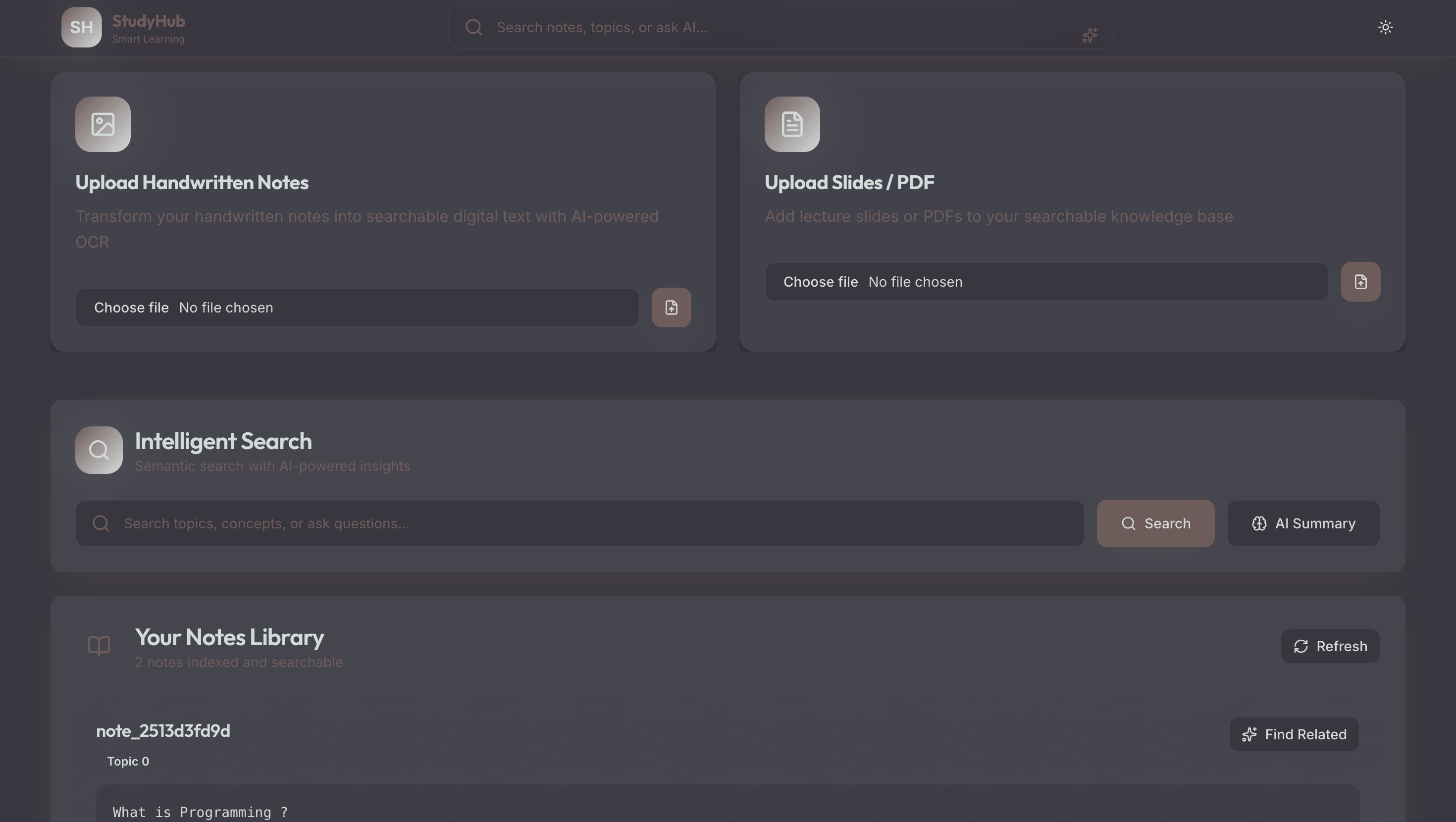
Students today juggle a messy mix of information—handwritten lecture notes in notebooks, scattered PPTs, random screenshots, and stacks of PDFs. While each piece is valuable, they rarely connect into a single, usable source of truth. Instead, knowledge remains fragmented across formats and devices. As a result: • Students waste hours searching for “that one slide” or flipping through half-filled notebooks • Revision becomes inefficient because insights are scattered rather than structured • Connections between lecture notes, research papers, and classroom slides are easily missed • Valuable personal notes often remain trapped on paper, inaccessible for digital use Even those who try to stay organized face challenges: • Manual digitization of notes is time-consuming and error-prone • Existing OCR tools capture text but fail to preserve meaning or context • There is no seamless way to merge handwritten content with digital material into a single knowledge base There is a clear need for a solution that: • Uses OCR to capture and digitize handwritten notes with accuracy • Aligns these notes with digital slides, textbooks, and research papers to create a unified view • Generates query able summaries, turning fragmented material into a dynamic, searchable “living textbook” • Supports semantic alignment, allowing cross-referencing between lecture highlights and deeper academic sources • Helps students revise smarter, not harder, by making their entire knowledge ecosystem coherent and accessible Such a platform could transform how students’ study by fusing personal learning with digital resources. Instead of scattered notes and disconnected files, learners would finally have a structured, interactive knowledge hub built from everything they already use.